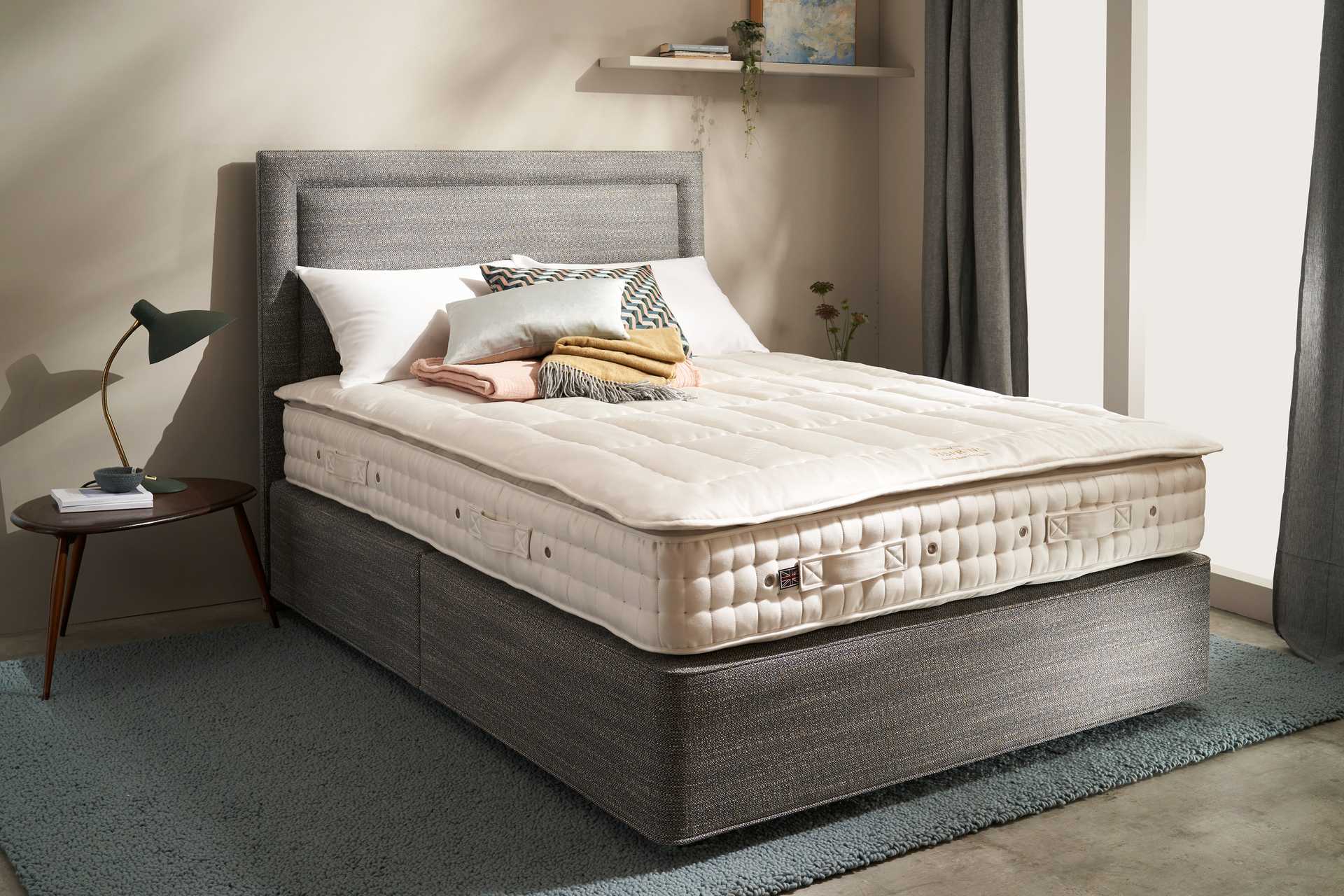
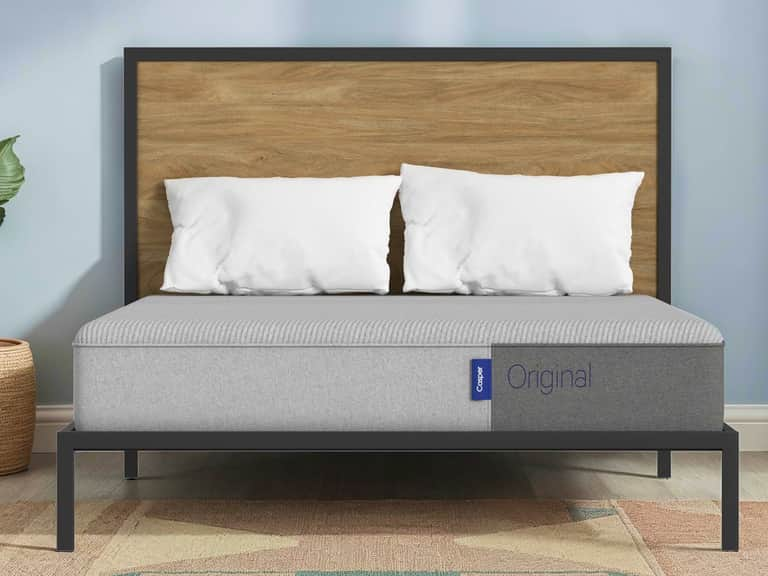
Mattress materials and sleep comfort
Latex Mattresses Explained: Firmness, Feel and Fit
A latex mattress has a particular talent for seeming both yielding and lively. It gives under the body, then pushes back; it cushions without quite swallowing you. Whether that combination feels wonderfully supportive or simply too springy depends on more than the word latex on a label. The source of the material, the way it is made, the arrangement of its layers and the sleeper resting above them all have a part to play.
Published 5 November 2026
What “latex mattress” can mean
In ordinary conversation, latex suggests rubber: elastic, durable, a little startling when stretched. In a mattress, latex is a resilient foam used in one or more comfort or support layers. It may be made from natural rubber, synthetic rubber, or a blend. A mattress described as latex may also contain other materials, including foam, fibres or springs, so the name alone does not tell you what lies beneath the cover.
Natural latex begins with liquid harvested from rubber trees, which is processed into a foam. Synthetic latex is produced from petrochemical ingredients; blended versions combine natural and synthetic materials in varying proportions. These terms describe the material’s origins, not a guaranteed level of comfort, durability or environmental performance. Those outcomes depend on formulation, manufacturing, construction and care. A useful label should make clear which kind of latex is used and where in the mattress it appears.
Two common manufacturing methods are Dunlop and Talalay. They describe different ways of turning latex into foam, and they can yield differences in structure and feel. Dunlop latex is made through a process in which the latex mixture is poured into a mould and cured. Talalay involves additional steps, including expanding the mixture and freezing it before curing. Shoppers often hear that one is inherently firmer or more durable than the other. Such shorthand can be misleading: the recipe, density, layer thickness and finished design matter, and products vary. Treat the method as one detail to investigate, not a verdict on how a mattress will feel.
There is also an important difference between a mattress made entirely or mostly from latex and a hybrid mattress that uses latex over a spring unit. A latex hybrid may feel buoyant but more ventilated or springy, depending on its pocket springs and upper layers. A mattress with a latex comfort layer over another support material can borrow characteristics from both. The construction description is often more informative than the headline name.
The feel: buoyant, responsive, and not quite weightless
Many sleepers describe latex as buoyant. The comparison is not to floating, exactly, but to being held near the surface rather than drawn down into a slow-moving hollow. When you shift position, the material tends to recover promptly. That responsiveness can make turning over feel easy, particularly for people who dislike the enveloping sensation sometimes associated with memory foam.
Latex can still contour to the body. The difference is often in the pace and character of that contouring. Memory foam commonly responds more slowly to pressure and warmth, allowing the sleeper to settle into its surface. Latex generally pushes back more quickly, so the sensation can be closer to gentle lift than deep moulding. Neither description guarantees a particular experience: a thin, firm latex layer will behave differently from a thick, soft one, and the upholstery above it can change the first impression.
Some people appreciate the sense of ease that comes with a responsive surface. Others find the rebound distracting, or would rather have the close, quiet cradle of a slower foam. “Comfort” is not a material property that can be settled in a laboratory and delivered uniformly to every bedroom. It is an interaction between a surface and a body, filtered through preference, temperature, sleep position and the small habits of the night.
Latex is sometimes marketed as cool because its open structure can allow air to move through the material. That may help with ventilation, but temperature depends on the whole bed: cover fabric, quilting, sheets, room conditions, the sleeper’s body and any additional layers. A breathable core does not promise a cool night in every setting. If temperature is a concern, look for the full construction and consider whether thick comfort layers or a tightly woven cover might affect airflow.
Firmness is a sensation, not a number
Mattress firmness scales appear reassuringly precise. A product might be called medium, medium-firm or firm, sometimes accompanied by a number. But these labels are not a universal measurement system. One maker’s medium can feel like another’s firm, and a sleeper’s weight, shape and preferred position change how the same mattress is experienced. A firmness rating is a starting point for comparison, not a promise.
With latex, firmness is influenced by the density and formulation of the foam, the thickness of each layer, the way layers are arranged and the support beneath them. A mattress with a soft upper layer over a firmer core may initially feel welcoming while keeping the body from sinking too far. A more uniform construction can feel consistent across the surface. If the mattress is a hybrid, the spring unit adds another element: its tension, zoning and interaction with the latex affect the final response.
Pressure relief is not achieved simply by choosing the softest available bed. The surface needs to yield enough to accommodate prominent areas such as the shoulders and hips, while providing support that allows the spine to rest in a comfortable alignment. Too firm a surface may concentrate pressure; too soft a surface may allow some sleepers to sag or feel unsupported. The right balance is personal, and it may differ for two people sharing a bed.
Body weight can influence how deeply someone compresses a mattress, but weight alone does not dictate a suitable firmness. Body shape, shoulder width, hip proportions and preferred posture also matter. So does the mattress base. A suitable mattress on an unsuitable or damaged foundation may perform poorly, and a new surface can feel different from the one tested in a showroom.
How sleeping position changes the question
Side sleepers often need enough give around the shoulder and hip to avoid feeling pressed against the bed. A latex mattress with a more accommodating upper layer may suit some; others may prefer a softer comfort layer over a supportive centre. If the mattress feels unyielding at these pressure points, consider the firmness and thickness of the comfort layers rather than assuming that all latex has the same feel.
Back sleepers may value a surface that supports the lower back without forcing the body into an unnatural arch. Some find a medium or medium-firm feel comfortable, but labels are too inconsistent to prescribe one for everyone. The practical question is whether the body feels supported and relaxed, without an obvious gap, pressure hotspot or sinking sensation.
Stomach sleepers often pay close attention to how much the hips sink. A mattress that allows excessive sinking may feel uncomfortable to some people in this position, while a very firm surface can still create pressure elsewhere. Rather than treating position as a rulebook, use it as a clue about where support and cushioning matter most.
Combination sleepers—those who change position during the night—may appreciate latex’s quick response. It can be easier to move across than a slow-recovering surface, although that preference is individual. If you share a bed, also consider motion transfer: latex may absorb some movement, but an all-foam design, a hybrid and a pocket-spring construction can behave differently. Testing the specific mattress, where possible, is more useful than relying on broad material comparisons.
Latex compared with other mattress materials
Compared with memory foam, latex often feels more immediately responsive. Memory foam may offer a closer, slower contour; latex tends to rebound more quickly. Both materials can relieve pressure, and both can be made in different firmnesses. A shopper choosing between them might ask whether they prefer to settle into the mattress or remain more on its surface, and whether ease of movement matters to them.
Compared with conventional spring mattresses, latex offers a different kind of support. Springs can provide a lively, familiar bounce, while latex gives a more continuous surface response. A pocket-spring mattress places individual coils in fabric pockets, allowing them to move with some independence. A latex hybrid combines that spring structure with a latex layer, producing a feel shaped by both systems. There is no simple hierarchy: construction quality and the sleeper’s preferences matter more than the category name.
Latex is also distinct from polyurethane foam, a broad family that includes many mattress foams. Some polyurethane foams are designed for cushioning, some for support, and some for particular performance characteristics. The word “foam” by itself is no more specific than “mattress.” Useful comparisons describe the materials, layer thicknesses and intended roles rather than treating every foam as interchangeable.
Natural latex can be attractive to shoppers who want a material derived in part from a renewable source, but “natural” should not be mistaken for a complete account of a product’s environmental impact. Processing, blends, adhesives, covers, transport, certifications and product lifespan all contribute to the broader picture. Read claims carefully, and look for specific, verifiable information rather than relying on a reassuring adjective.
A practical way to compare options
When reading product descriptions, start with the construction. Ask whether the mattress is all-latex or a hybrid, which layers contain latex, how thick those layers are, and what supports them. If the maker identifies natural, synthetic or blended latex, check whether the description explains the proportion or simply uses a broad label. Details about the cover and comfort layers can help explain why two mattresses with the same core material feel unlike each other.
- Look beyond the firmness word. Compare layer layouts, thicknesses and any available explanation of the firmness scale.
- Match the test to your habits. Lie in your usual sleep position for more than a few moments, and notice pressure, support and how easily you can turn.
- Check the base. Confirm that the mattress is compatible with your bed frame or foundation and follow the maker’s guidance about slats and support.
- Read the trial and returns terms. In the UK, check the retailer’s stated policy, any trial conditions, collection arrangements and possible charges before buying.
- Ask about care and warranty. Understand whether the mattress can be rotated, whether it should be turned, and what the warranty does and does not cover.
- Compare the complete cost. Include delivery, removal of an old mattress, a suitable base and any required protector or bedding.
For online purchases, a home trial can be useful, but its terms matter. A trial may require the mattress to be used for a minimum period, kept in suitable condition or returned through a particular process. The right to cancel a distance purchase and a retailer’s voluntary comfort trial are not necessarily the same thing. Check current UK consumer guidance and the seller’s terms for the circumstances that apply to your purchase.
Care, lifespan and everyday realities
Latex mattresses do not all have identical care instructions. Some can be rotated head-to-foot; others have layered designs or zoned construction that make a prescribed orientation important. A mattress designed with a distinct top and bottom generally should not be flipped unless the maker says it can be. Follow the care label and product instructions rather than assuming that a traditional routine applies to every modern mattress.
A removable cover may be washable, but the latex core usually has different requirements. Avoid soaking or applying cleaning products directly to the foam unless the manufacturer permits it. A breathable mattress protector can help guard against everyday moisture and staining, though any added layer may alter the surface feel slightly. Let a mattress air when appropriate, and keep it supported on a compatible base.
Claims about lifespan should be treated as estimates. Wear depends on materials, construction, use, care, foundation and the weight and movement placed on the mattress. Visible sagging, persistent discomfort or a change in support may be more meaningful than a calendar figure. A warranty can address specified manufacturing defects under stated conditions; it is not a guarantee that every sleeper will remain comfortable for a fixed number of years.
Latex is dense and can be heavy, particularly in a substantial all-latex mattress. That matters when arranging delivery, moving house or changing bedding. A design with separate layers may be easier to handle, but it still requires careful lifting and a suitable frame. Before ordering, check the delivered dimensions and access route through stairways, doorways and landings—a domestic detail less romantic than the promise of perfect sleep, but often more decisive.
Questions worth asking before you decide
Is the latex natural, synthetic or blended, and which parts of the mattress contain it? What are the layers above and below it? Does the mattress have a separate comfort layer, a zoned design or a spring unit? How does the company define its firmness rating? Is the cover removable, and what care does it require? What support does the base need to provide? These questions turn a broad material label into a more concrete account of what you will actually sleep on.
It is also worth asking what happens if the mattress is not right. Find out how long a trial lasts, whether there is a settling-in period, what condition the mattress must be in, and who pays for collection. If buying in person, spend enough time on the bed to notice whether your shoulders or hips feel compressed, whether your lower back feels supported and whether changing position is comfortable. A showroom cannot reproduce a whole night, but a brief, deliberate test is better than pressing a hand into the surface and trusting the resulting dimple.
The useful conclusion
Latex is not a firmness level or a guarantee of a particular kind of sleep. It is a family of materials and constructions, often associated with buoyancy, responsive support and a surface that can contour without the slow embrace of some other foams. Those qualities may suit people who like to move easily and prefer a bed that feels more lifted than enveloping. They may be less appealing to someone who wants deep sink or a very quiet, close-fitting cradle.
The best comparison begins with the actual layers, not the shorthand on the label. Consider how you sleep, where you feel pressure, how much rebound you enjoy and what support feels comfortable. Then weigh those sensations against the practical matters: base compatibility, care, returns, warranty and the mattress’s full material description. A latex mattress can be an excellent fit, but it earns that distinction one sleeper, one construction and one ordinary night at a time.
Frequently asked questions
Are latex mattresses always firm?
No. Latex mattresses are made in a range of firmnesses, and the finished feel depends on formulation, layer thickness, construction and the materials beneath and above the latex. Firmness labels also vary between manufacturers.
Is natural latex the same as synthetic latex?
No. Natural latex is made from rubber-tree sap, while synthetic latex is made from manufactured ingredients; some mattresses use a blend. The specific composition should be checked in the product details rather than inferred from a general “latex” description.
Does latex help with pressure relief?
It can cushion the body and distribute pressure, but the effect depends on the mattress design and the sleeper. The useful test is whether the surface feels accommodating at pressure points while still providing comfortable support.
How should a latex mattress be maintained?
Follow the maker’s instructions for the particular model. Guidance on rotation, flipping, cleaning and the required base can vary, especially between all-latex mattresses and hybrids.